Industry Insights
On Thursday, October 15th, the Cost Intelligence Summit, co-hosted by Tset and A2MAC1, returned to Munich for its second edition. Over 200 cost engineers, procurement leaders, and executives gathered at MünchenHOCH5 for a full day of talks and networking. A year after the first edition brought 100+ people together, the event doubled in size, with many past attendees returning and many new faces joining. On stage, speakers from Knorr-Bremse Rail, BMW Group, A2MAC1, Brose, TE Connectivity, AGCO, and Tset talked about what they have built, what failed along the way, and what they would do differently.
The thread through every talk was clear. AI handles the messy work around a cost calculation: reading drawings, structuring data, and generating ideas. The calculation itself stays deterministic and versioned, because a number that changes every week does not hold up in front of a supplier. Once the calculation is automated, cost engineers can focus on creating value, and should-cost becomes cost intelligence.
Here is what each session covered.
Setting the Stage With A2MAC1 and Tset: Trust, Data, and Community
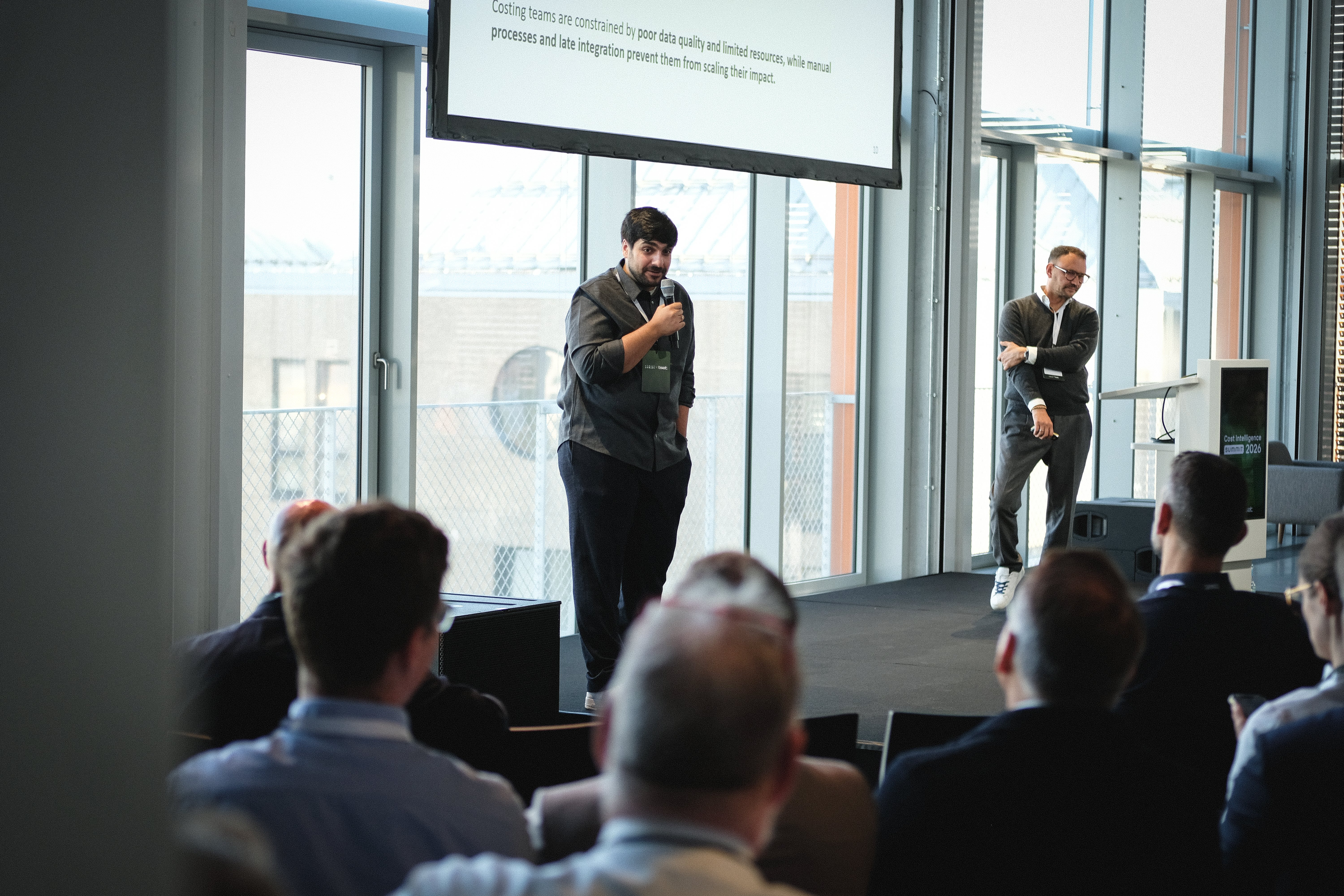
Jasmino Burkic, CRO, A2MAC1, and Sasan Hashemi, Managing Director and Founder, Tset
Sasan Hashemi opened the first session with a reality check from the Status of Cost Engineering report: despite the headlines, the community still has catching up to do on automation. At the same time, expectations keep rising: more variants, earlier answers, and more workload for the same teams. Jasmino Burkic framed the day around community and asked the audience to challenge A2MAC1 and Tset openly on what they build.
Key takeaways:
- Poor data quality is still the number one barrier to automated costing, just as it was a year ago.
- AI is a tool, in the same line as the spreadsheet and costing software before it.
- No company solves this alone. Sharing challenges across the industry speeds up everyone’s learning.
Data First, Agents Second at Knorr-Bremse Rail
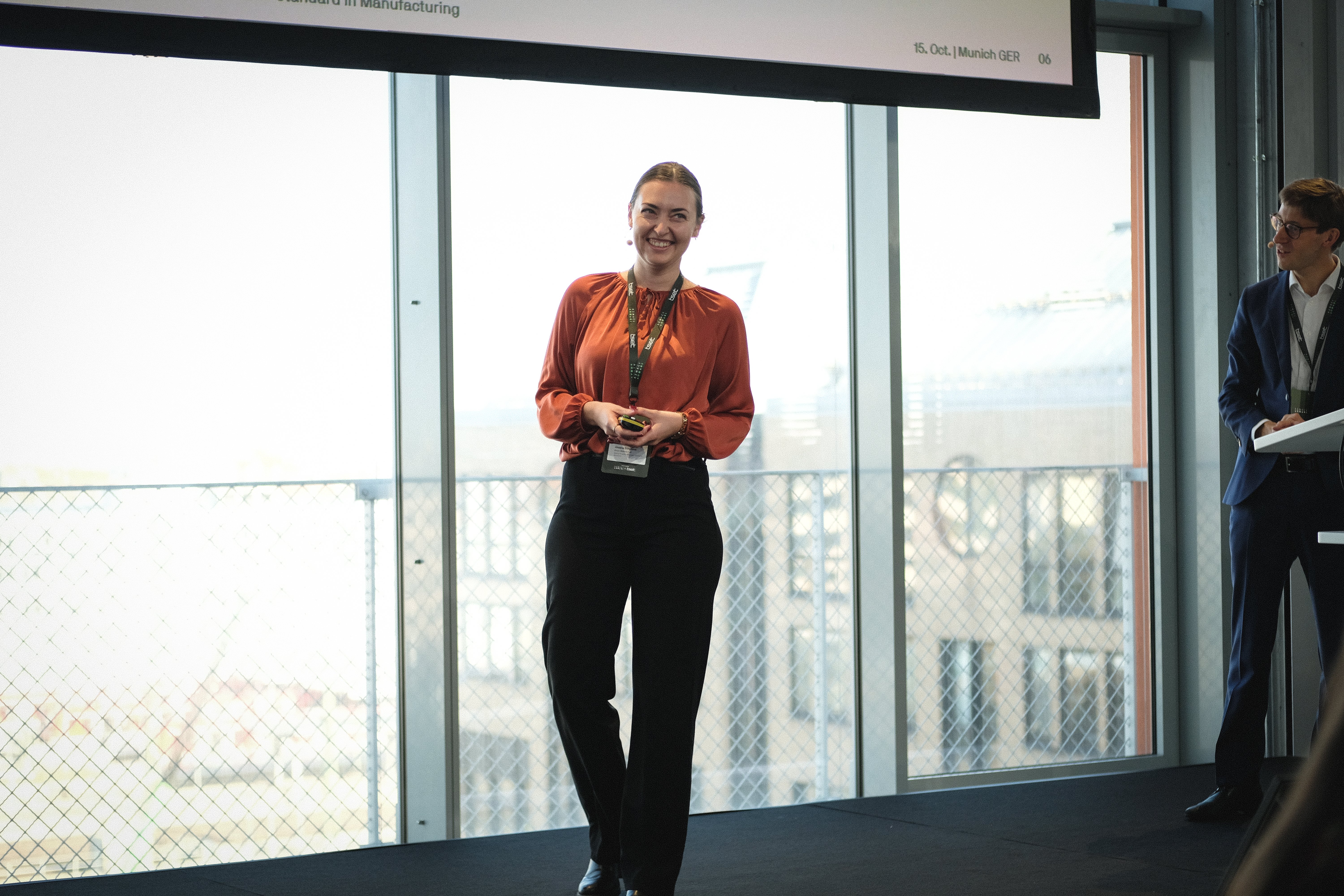
Aksana Svirydava, Global Program Manager VAVE & AI Solutions, Knorr-Bremse Rail
Aksana Svirydava's team reads out 10,000+ drawings overnight, combines the metadata with ERP prices, and gives buyers transparency across 100,000+ part numbers. On top of this data, her AI tool Optimind generates 15+ design-to-cost ideas in about a minute. Then came the honest part: at launch, almost nobody used it, and about 80% of the rollout effort went into acceptance.
Key takeaways:
- A rough cost estimate across the whole portfolio shows cost engineers where to look first.
- Not every use case needs generative AI. A classic similarity algorithm found the same screw bought under four part numbers.
- Treat adoption as its own project. Tools need to fit the workflow, show how they reach their results, and let engineers develop ideas themselves.
- Expertise gains value with AI, because only experts can tell when a confident answer is wrong.
Speed Meets Accuracy at BMW Group
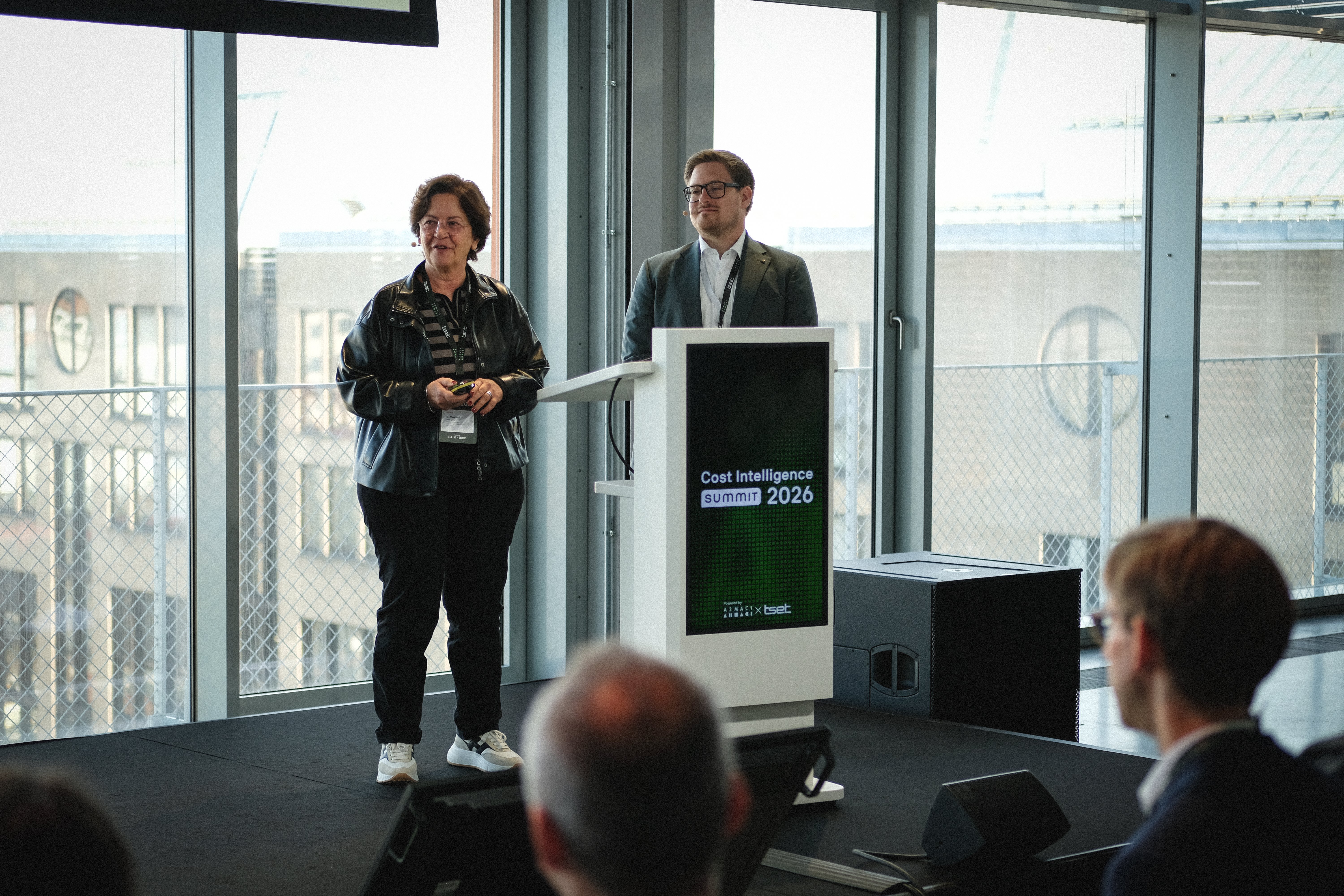
Dr. Eleni Ralli, Director Digitalization, CO2, Cost Engineering Software, Development Services, and Christoph Starringer, Cost Engineering Data Management and Analytics, Digitalization, BMW Group
Dr. Eleni Ralli and Christoph Starringer explained why speed now matters as much as accuracy in BMW Group cost engineering. By making validated cost data and standardized models available to buyers through the company's AI environment, they make sure answers are based on BMW knowledge. For standard components, 90-95% accuracy is good enough, which frees experts to focus on complex parts.
From Demo to Product: What A2MAC1 Learned Building an AI Tool
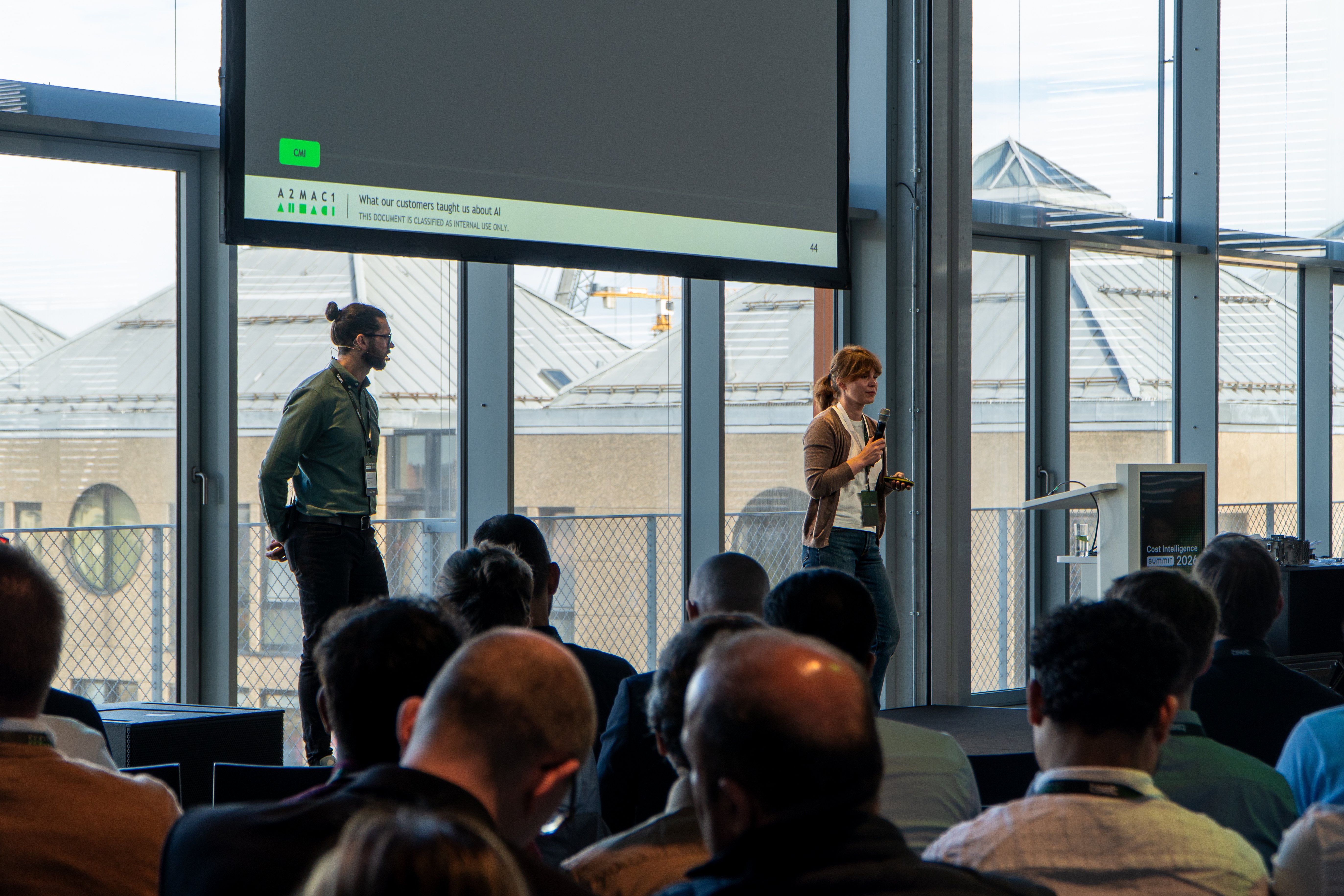
Natallia Shauchenka, CPO, A2MAC1, and Mitchell Morgan, Customer Engagement Manager, A2MAC1
Natallia Shauchenka and Mitchell Morgan shared what A2MAC1 learned taking the Cost Measure Ideator (CMI) from demo to market. A live "keep or kill" round with ideas from early trials showed how data gaps turn into bad ideas: CMI suggested deleting a front reading light that the car actually had, because the light was filed elsewhere in the data. After 56 pieces of feedback from 16 customers, expert-written rules now filter out irrelevant ideas before users see them. Next: system-level ideas, open APIs, and making CMI part of the cost engineering workflow in Tset Studio.
Key takeaways:
- A good demo can still be a bad product. Set quality gates before release and be honest about maturity.
- Relevance beats volume. One usable idea is worth more than 50,000 to sort through.
- Pair the tool with a person and a process. Without a champion inside the organization, adoption stalls.
Bottom-Up Meets Top-Down: Target Costing at Brose
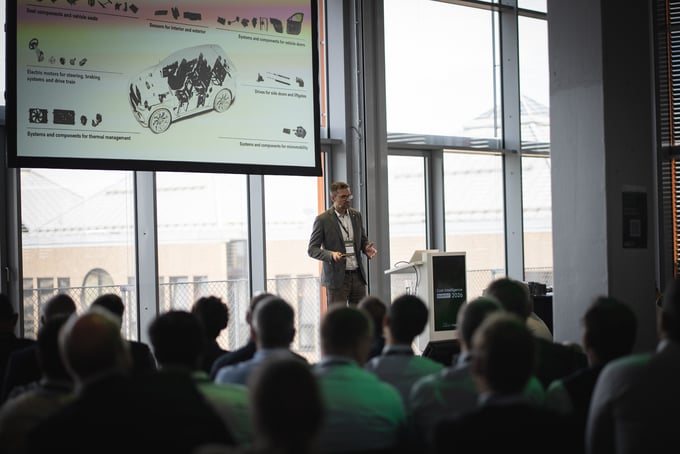
Michael Flieger, VP Cost Management Purchasing, Brose
With just over 20 cost engineers for 22,000+ parts, Brose has to use its resources in a targeted way. Performance pricing, the top-down method, used to be a one-off project because someone had to read attributes off drawings by hand, which took days or weeks. With AI, Brose expects this to take minutes. Michael Flieger also showed a regression formula for springs running as a small model in the Technology Model Framework (TMF) in Tset Studio.
Key takeaways:
- Run top-down and bottom-up in parallel. Where they match, trust the result. Where they diverge, bring in a human.
- Use price formulas to set targets. Use bottom-up calculations to negotiate.
- Update regression models several times a year, because raw material prices move fast.
Designing Cost Engineering Systems for AI Agents at Tset
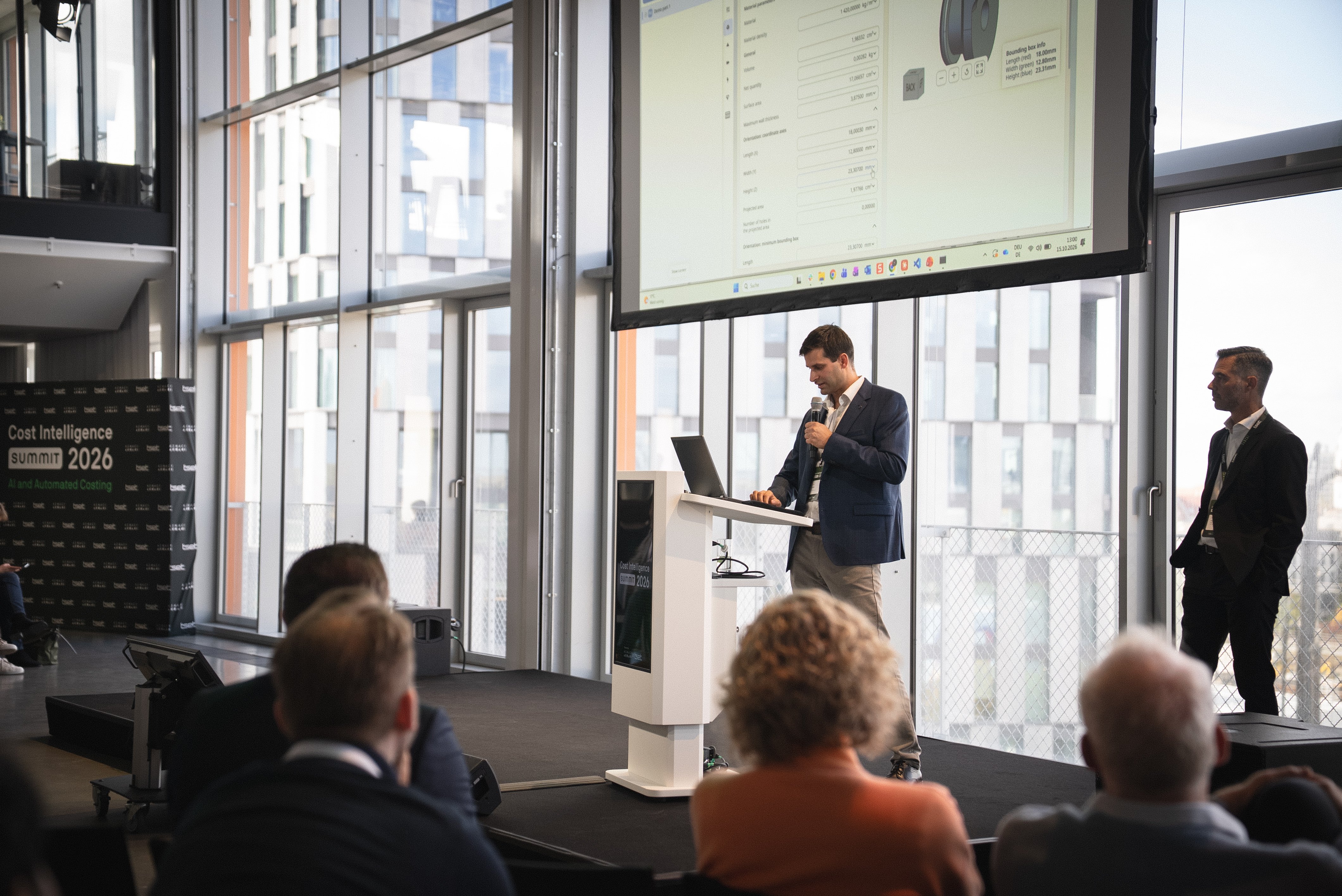
Andreas Lachmaier, VP Technology, Tset, and Karl Egle, Senior Cost Engineer, Tset
Andreas Lachmaier showed why AI should not do the costing itself. He had an AI cost the same bracket three weeks in a row and got €1.00, €0.60, and €0.48. At 150,000 pieces, that spread is worth €78,000. Agents need versioned models, traceable master data, and validation that tells them what is wrong. Karl Egle, a cost engineer with no programming background, then demoed Cost Pad, an interface he built in one day. It reads a drawing, lets him confirm uncertain values, and runs the calculation through TMF in Tset Studio.
Key takeaways:
- Keep AI out of the calculation itself. Use it to prepare inputs and explain results.
- Version your cost models, so the same input always returns the same cost and every change can be traced.
- Design for agents: clear error messages, validation that catches implausible values, and an MCP server that only exposes what the agent is allowed to do.
- Bring your own agent. With Tset Studio as the system, cost engineers can build their own interface today.
From Costing Provider to Value Creation Partner at TE Connectivity
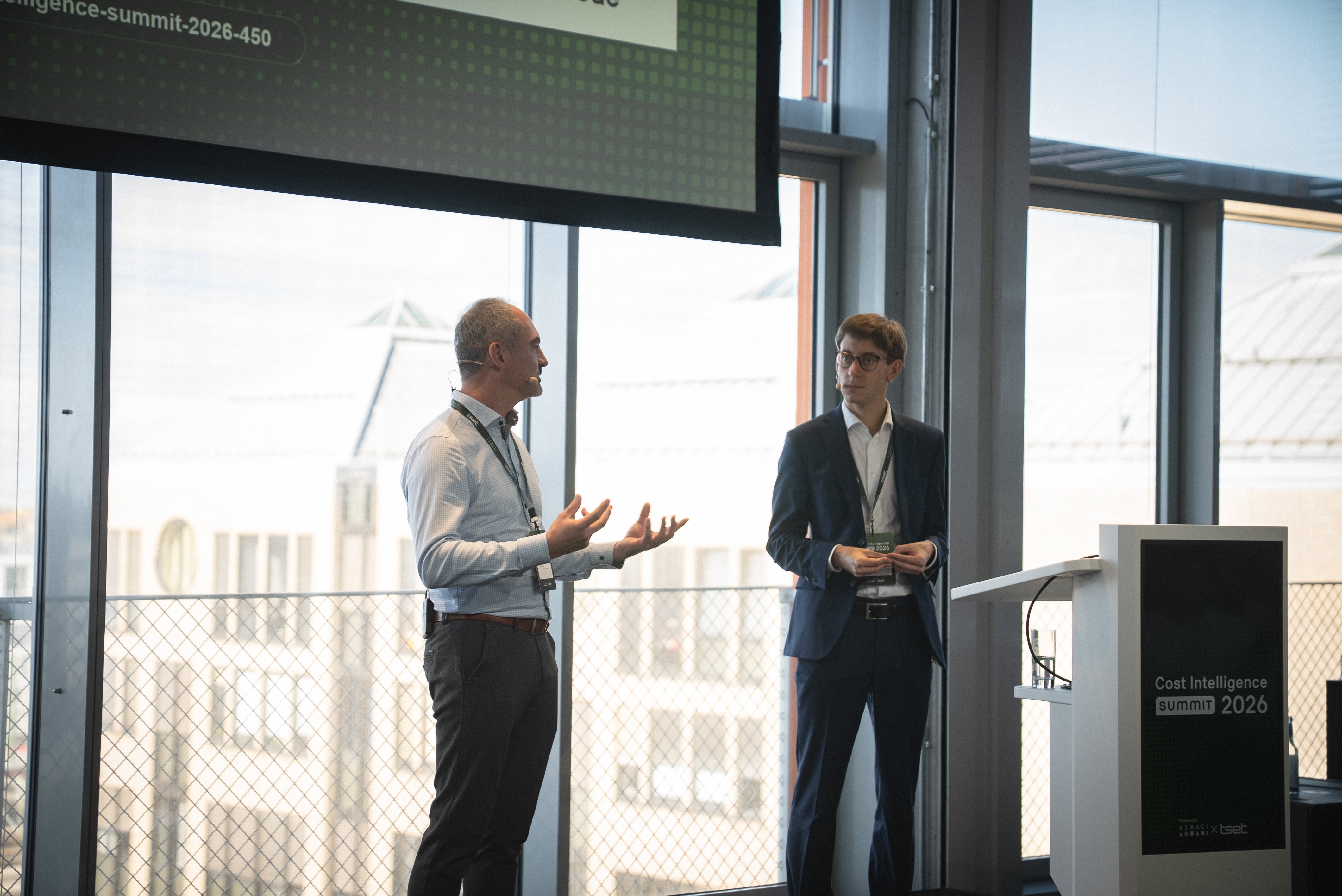
Falk Schröter, Sr. Mgr. Cost & Value Engineering, TE Connectivity
Falk Schröter built TE Connectivity's team from one person to ten in four years, hiring technical specialists over classic cost engineers. The first gains came from hiring, standardization, and quick-pricing tools, with no AI involved. Output automation took four days and ended up fully deterministic. The team still spends up to 40% of its time moving data in and out, so AI now targets the input side. He wants to use the time this frees up to move the team from a "kebab shop" service model to a trusted partner role.
Key takeaways:
- Start with the basics. The right hires, standardized data, and quick-pricing tools brought the first gains without AI.
- Automate deterministic tasks first. Use AI where inputs are messy.
- Invest freed-up time in consulting and challenging engineers. Calculations the organization cannot absorb create no value.
- Trust has to be earned and cannot be installed, so new cost engineering teams need patience.
Scaling the Costing Library at A2MAC1
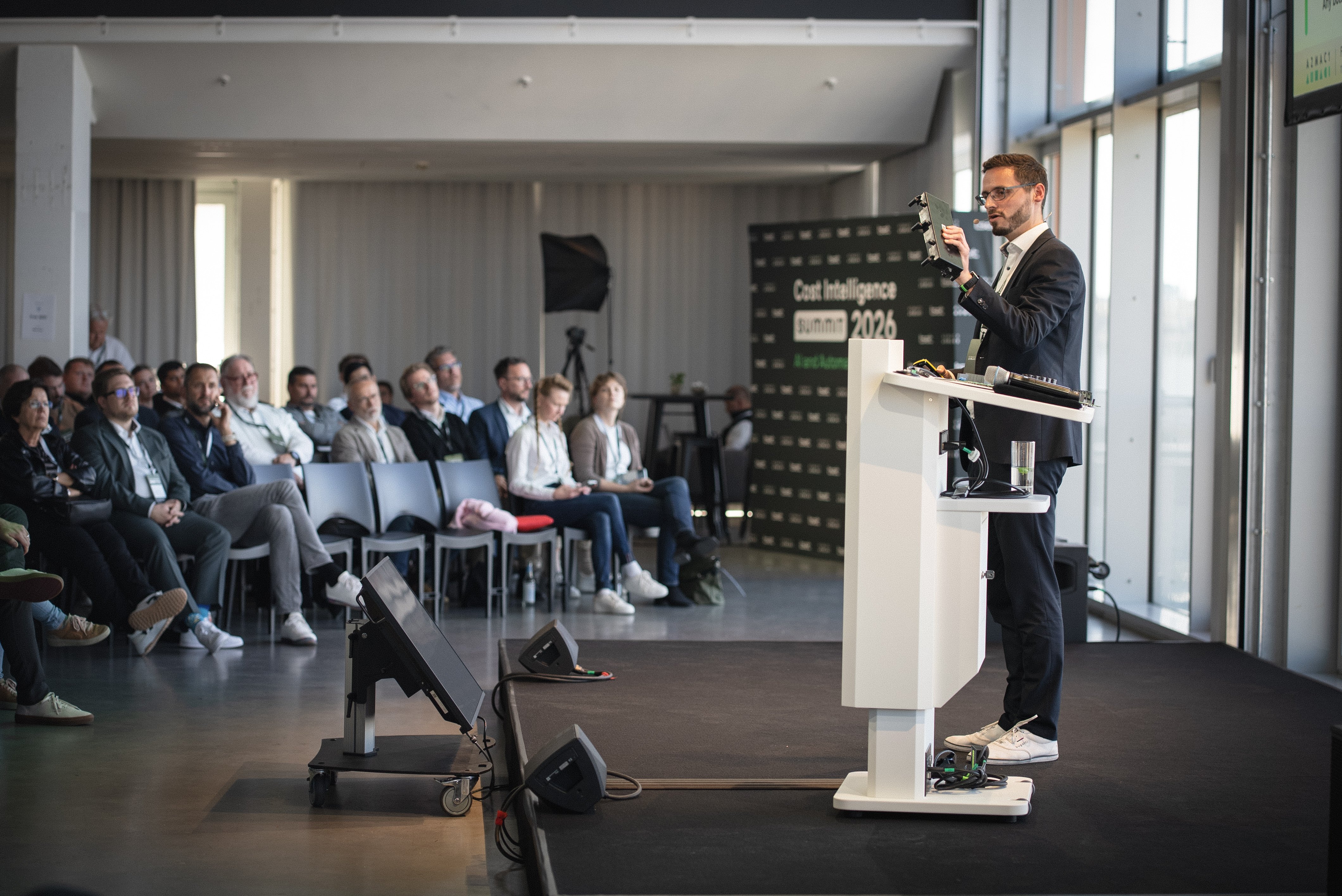
Sascha Voglgsang, VP Costing & Insights, A2MAC1
A2MAC1's Costing Library grew from four fully costed vehicles in 2024 to 15+ in 2026, with 50 per year as the target. Because customers can compare any two calculations side by side, consistency became the main challenge: the same method for the same technology, central governance across regions, and a way to handle diverging BOM hierarchies. The next step is to connect the Costing Library with costing software like Tset Studio, so customers can translate benchmark costs into their own assumptions.
Key takeaways:
- Once customers compare results side by side, consistency matters as much as accuracy. Use the same method for the same technology across all commodities.
- Fix hierarchy and taxonomy before you scale. Diverging BOM structures are an industry-wide problem.
- Keep the costing engine deterministic and governed, and let AI orchestrate around it.
- Localization rules and volatile component prices make scenario simulation a requirement.
From Should-Cost to Cost Intelligence at AGCO
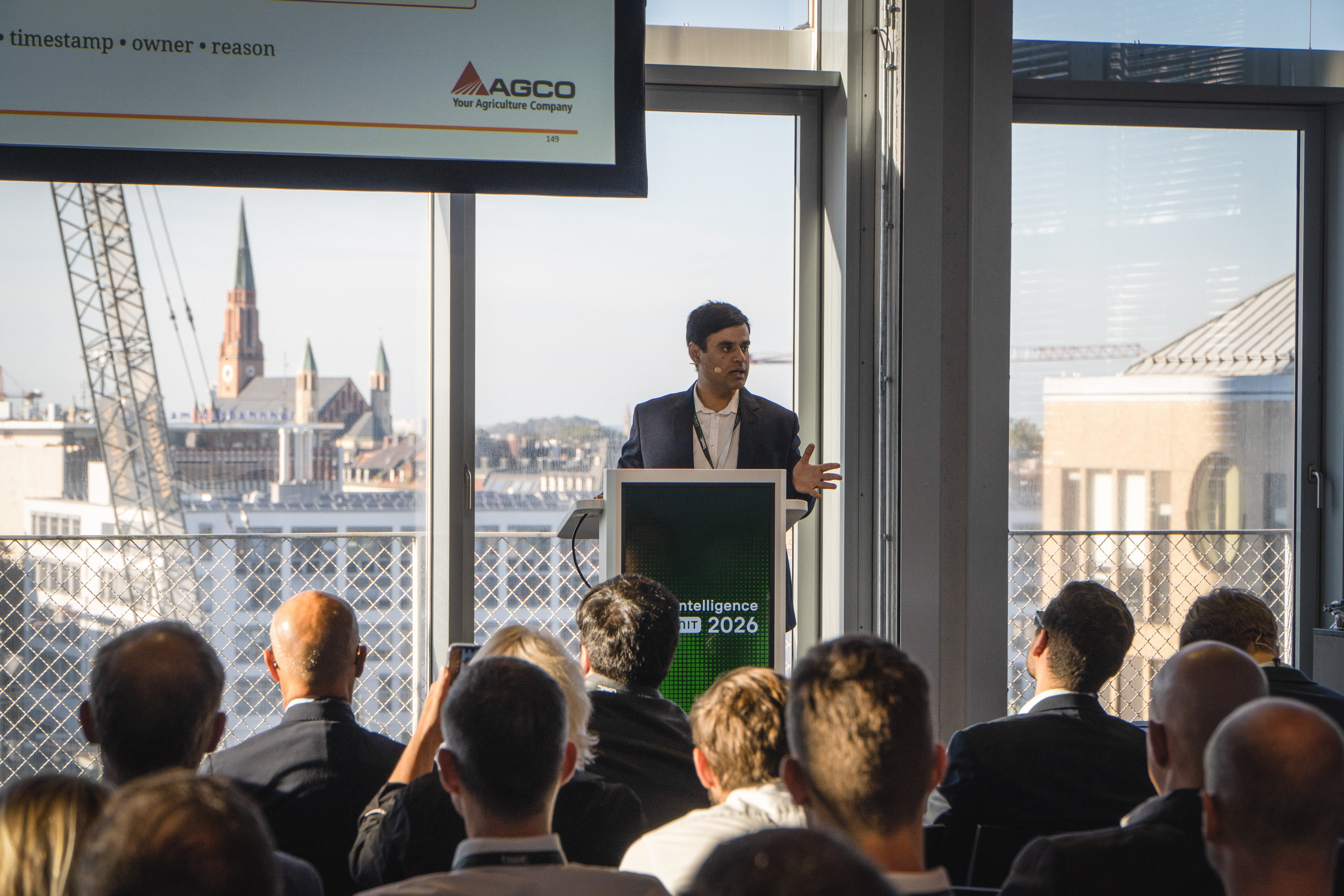
Yogendra Joshi, Global Cost Engineering Systems and Data, AGCO
As a low-volume, highly customized OEM, AGCO needs cost intelligence: costing with memory. Yogendra Joshi closed the day with five lessons from AGCO's journey. The most practical one is a data confidence index for raw material data, based on recency, coverage, readiness, and verification. It decides whether a calculation can be automated, needs review, or needs better data first.
Key takeaways:
- Score your data before you automate it. High confidence means automate, medium means review, and low means fix the data first.
- Connecting systems is different from automating them. Every connection needs a purpose.
- Small errors become big ones across an automated portfolio, so every data point needs a source, an owner, and a timestamp.
- The pull for automation has to come from downstream: sourcing, engineering, and finance.
Five Takeaways From the Day
1. Data quality is still the bottleneck
A year after the first summit, data quality is still the barrier everyone comes back to. Every successful use case on stage started with cleaning, structuring, and owning the data. The most advanced approach went one step further and scored how far the data can be trusted.
2. AI belongs at the edges of the calculation
Reading drawings, structuring inputs, generating ideas, and writing reports are strong AI use cases. The calculation in the middle has to be deterministic, versioned, and traceable. If the same part returns a different cost every week, you cannot negotiate with it.
3. Adoption decides the ROI
Building a working AI tool is the easier half. What drives adoption: integrating the tool into the existing workflow, showing how it reaches its results, and letting experts develop ideas with it instead of handing them a finished list. The metric that counts is whether the workflow changed.
4. Expertise becomes more valuable
When AI produces answers in seconds, the scarce skill is knowing when an answer is wrong. Critical thinking and accountability for decisions remain with the cost engineer. Accepting 90-95% accuracy on standard parts frees experts to focus where their judgment matters most.
5. More calculations do not mean more value
Automation creates capacity. Using it to produce ten times more calculations helps no one if the organization cannot absorb them. The value lies in what happens next: earlier involvement in development, stronger sourcing decisions, and savings that are actually realized.
Thank You to Our Community
The Cost Intelligence Summit exists because of the people who come and share openly. Thank you to every attendee who joined a poll, sent a question through the Q&A, and kept the discussions going on the terrace and at the booths.
A special thank you to our speakers for sharing their real projects, including what did not work: Aksana Svirydava (Knorr-Bremse Rail), Dr. Eleni Ralli and Christoph Starringer (BMW Group), Michael Flieger (Brose), Falk Schröter (TE Connectivity), Yogendra Joshi (AGCO), Jasmino Burkic, Natallia Shauchenka, Mitchell Morgan, and Sascha Voglgsang (A2MAC1), and Karl Egle, Andreas Lachmaier, and Sasan Hashemi (Tset).
Thank you to Jakob Etzel (Tset) for guiding us through the day as host and moderator. A huge thank you also to our co-organizers at A2MAC1 and to everyone behind the scenes who kept the day running, from registration to the last round of drinks.
See You at Cost Intelligence Summit 2027
Good news: Cost Intelligence Summit 2027 is already in the making. Want to be the first to know when the date is announced? Subscribe to our newsletter, and we will let you know. We look forward to seeing you there!