Understand Supplier Cost Structures to Negotiate Better Deals
Tset transforms sourcing from guesswork into precision. Leverage market data and cost models to gain transparency, compare supplier quotes, and negotiate with confidence.
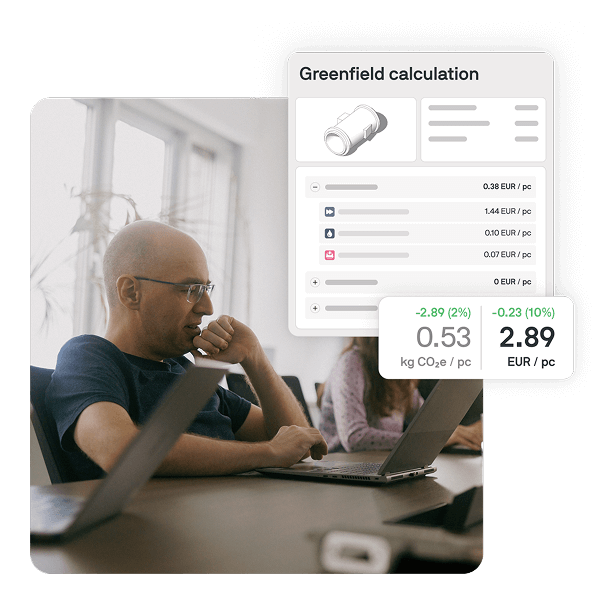
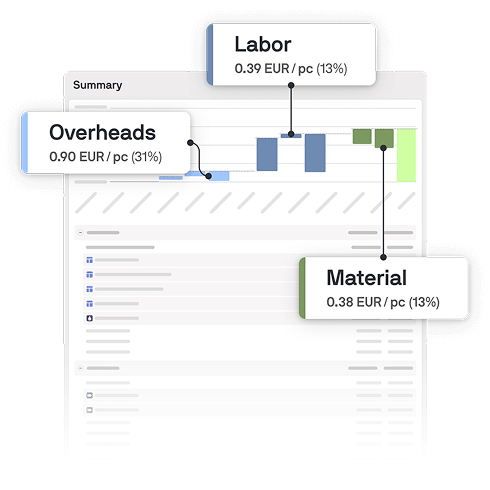
Understand What’s Behind the Price
See the full cost structure for any quote — materials, labor, machines, overhead, logistics, and more. Tset helps you standardize supplier inputs so you can evaluate offers using the same logic every time.
Lead Data-Backed Negotiations
Support every supplier discussion with detailed cost breakdowns and benchmark data. Tset equips you to move beyond assumptions, so you can challenge prices, justify targets, and negotiate with clarity and confidence.
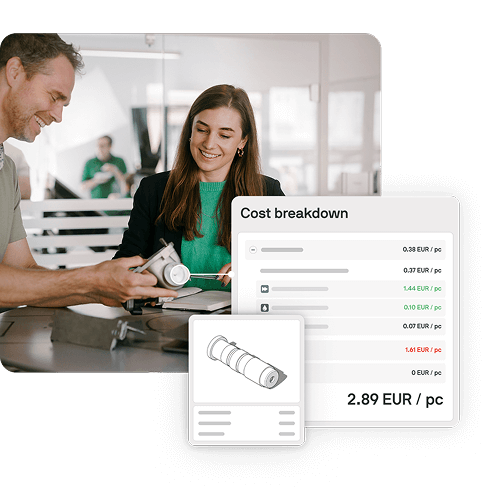
€4.9M Saved by Targeting High-Cost Components
See how a recreational engine OEM used Tset to identify overpriced parts and challenge supplier quotes with data-backed simulations. By focusing on critical cost drivers, they achieved a 34% cost reduction across 5,500 units per year, therefore saving €4.9M annually.
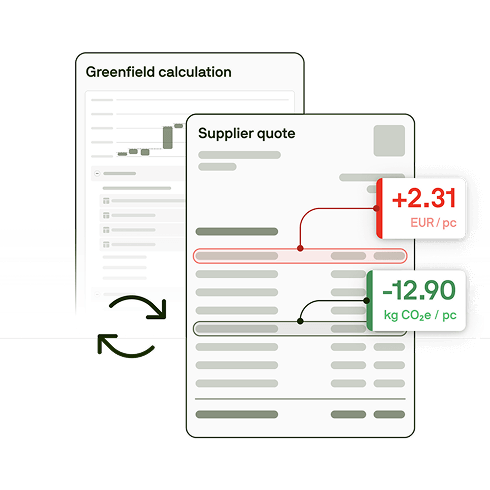
Compare Quotes With Clarity
Tset standardizes supplier inputs, making it easier to compare offers. Spend less time sorting data and more time making decisions that save money.
Identify Savings Opportunities
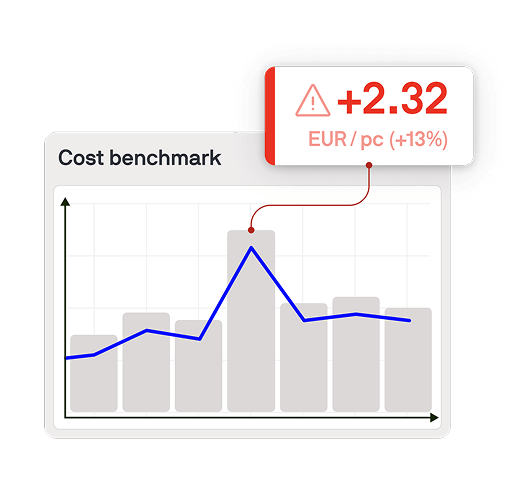
Use cost benchmarks and historical data to find overpriced quotes and inconsistent pricing. Know exactly where to push back and where to optimize your supply base.
Common Questions about Should Cost Analysis
What is should cost analysis?
Should cost analysis is a cost estimation method used in manufacturing and procurement to determine what a product, part, or component should cost to produce, based on its materials, manufacturing processes, labor rates, machine utilization, overhead, and a reasonable profit margin. It is independent of any supplier's quoted price. Procurement and cost engineering teams use should cost analysis to validate supplier quotes, set target prices before negotiations, and identify where costs can realistically be reduced.
What is should cost modeling software?
Should cost modeling software is a digital tool that automates the process of building bottom-up cost estimates for manufactured parts and products. Instead of relying on historical pricing or supplier-provided quotes alone, the software calculates an independent cost model using manufacturing data, regional labor rates, material costs, and machine parameters. Tset's should cost modeling software connects these calculations to your live sourcing workflow, so procurement teams can benchmark quotes and prepare for supplier negotiations without manual spreadsheet work.
How does should cost analysis support supplier negotiations?
Should cost analysis gives procurement teams a factual, data-backed reference point before any negotiation begins. When you know what a part should cost to produce at the component level, you can enter a supplier discussion with specific targets rather than broad price pressures. This shifts the negotiation dynamic: instead of asking a supplier to lower the price, you can point to a specific cost driver, such as a material markup, an inflated overhead rate, or an overstated labor time, and discuss it directly. Teams using should cost analysis consistently report more targeted negotiations, shorter negotiation cycles, and more sustainable savings outcomes.
What is the difference between should cost analysis and standard costing?
Standard costing uses predetermined, fixed cost values, typically based on historical data or planned production conditions, to track and control costs internally. It is primarily a financial accounting tool. Should cost analysis, on the other hand, is an external-facing method: it estimates what a product should cost to manufacture from the ground up, using current market data and manufacturing parameters, specifically to benchmark supplier pricing and inform negotiations. Where standard costing looks backward at what costs have been, should cost analysis looks outward at what costs should be.
Can should cost analysis be used for complex or multi-component parts?
Yes. Should cost analysis is particularly valuable for complex, multi-process parts where cost is harder to challenge intuitively, such as stamped metal assemblies, cast components, machined parts, or plastic injection-molded housings with tight tolerances. In these cases, the gap between a supplier's quoted price and the actual cost to produce is often larger, and harder to spot without a structured cost model. Tset handles multi-level cost breakdowns across materials, process steps, and manufacturing locations, making should cost analysis practical even for technically complex sourcing projects.
Ready to turn sourcing into a strategic advantage?
Whether you’re sourcing complex parts or managing dozens of suppliers, Tset helps you lower costs and take control of every quote.
Explore Our Whitepaper Selection
Transparent Cost Analysis for Smarter Procurement Decisions
Learn how Tset helps sourcing teams analyze supplier quotes, speed up RFQs, and reduce external costs through better data and clearer cost insights.